
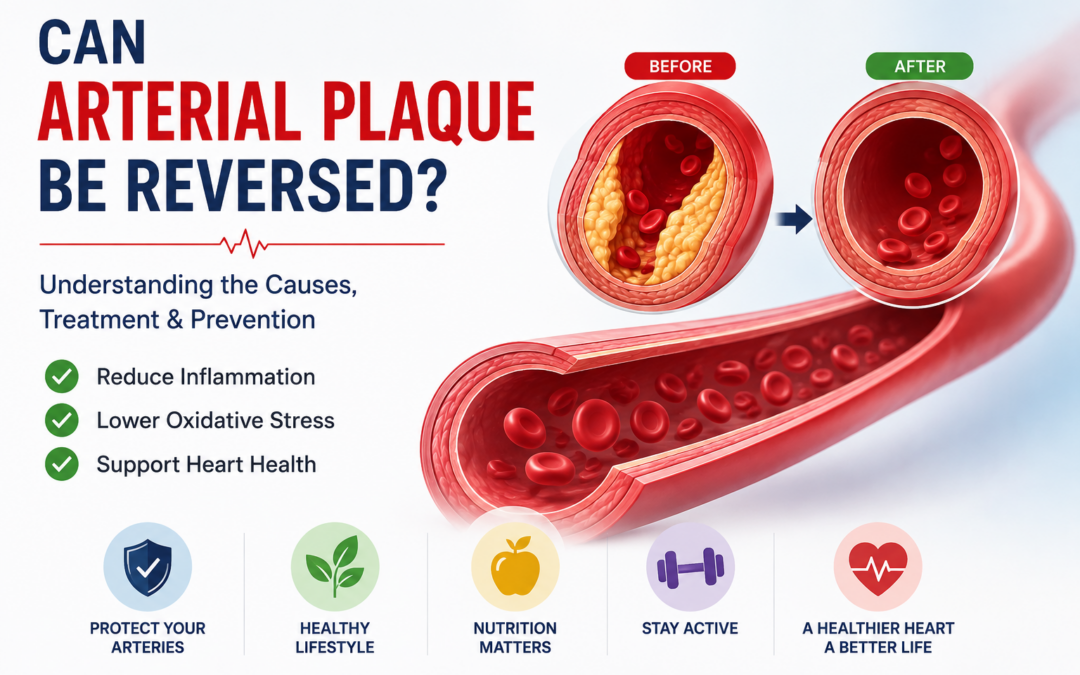
If you’ve ever sat across from a cardiologist and asked, “Can I actually get rid of this plaque?” you’ve probably heard some version of the same answer: No, but we can slow it down. That response isn’t coming from a bad place it’s just the standard playbook. Prescribe a statin, maybe a beta blocker, recommend a vague version of “heart-healthy eating,” and monitor things from a distance. Manage the disease. Don’t expect to undo it.
For most people, that answer settles the matter for good. They file plaque under “things that only get worse” and quietly wait for the next number to be worse than the last one. It’s a fear that sits in the background of daily life not loud enough to change anything, but present enough to color how people think about aging.
But is that actually true, or is it just the limit of a system trained to treat symptoms instead of biology? This question comes up often on our Unbreakable Vitality podcast, where we dig into exactly this kind of overlooked territory in longevity medicine.
Why “Permanent” Became the Default Answer
For decades, cardiovascular medicine has operated on a narrow assumption: once calcium shows up in an artery, that’s the end of the story. Slow the progression, prevent the next event, hope for the best. Most clinicians aren’t taught much about vascular remodeling or how nutrition and hormones influence the process at a cellular level. So when a patient asks about reversal, the honest answer is often “I wasn’t trained for that.”
It helps to zoom out. If you break a bone, your body heals it. If you burn your skin, new tissue grows back. Your vascular system is also living tissue — so why assume it’s the one system that can’t repair itself under the right conditions? It’s this exact question that shaped our clinic’s GPF Method, a framework built around treating root causes instead of just managing symptoms.
How Plaque Actually Forms
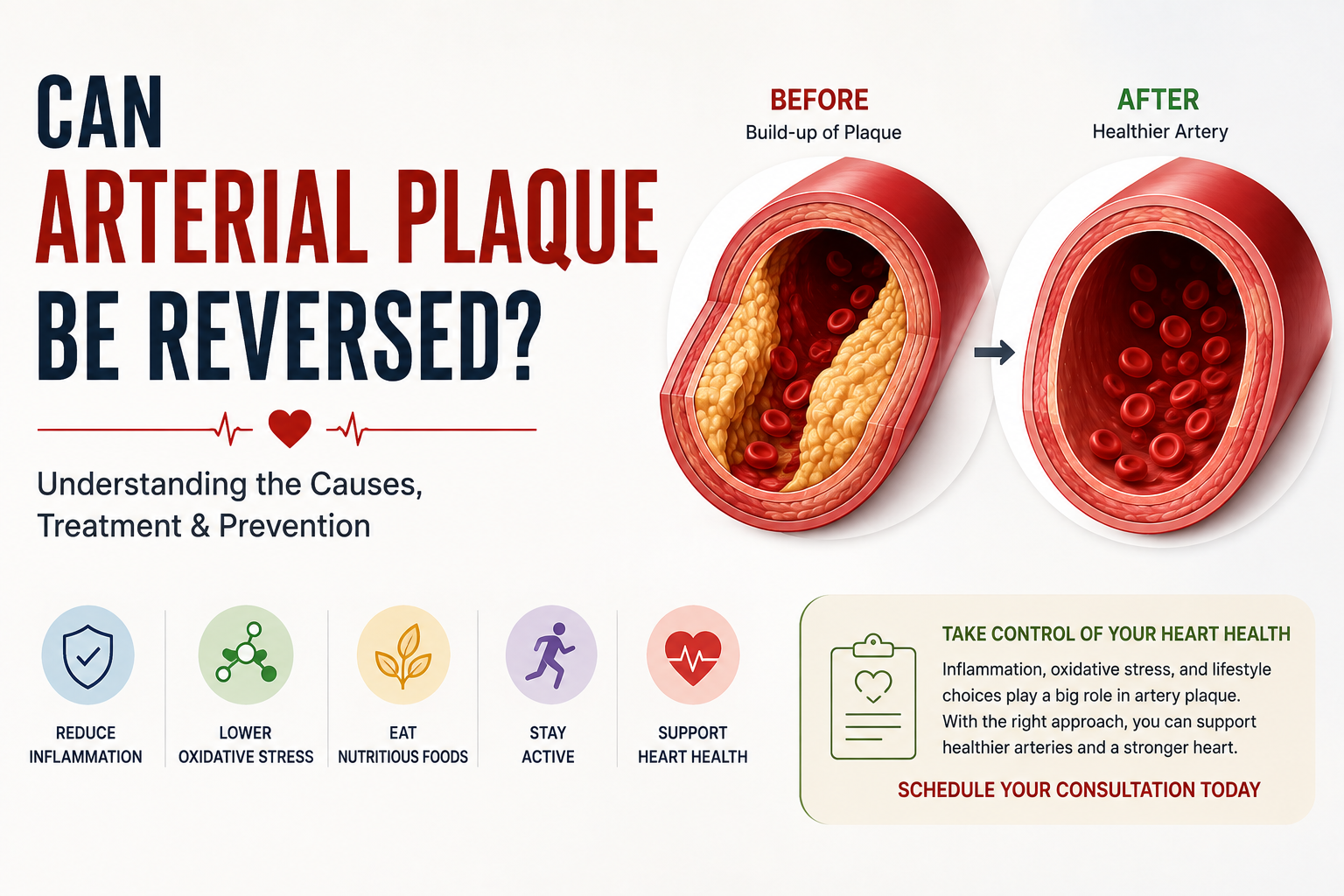
To understand reversal, it helps to understand the starting point: the endothelium, the paper-thin inner lining of your arteries. It’s protected by something called the glycocalyx a sugar-protein layer that keeps blood moving smoothly, almost like a non-stick coating.
When that layer gets damaged by high blood sugar, oxidative stress, poor sleep, or chronic stress small cracks form in the endothelial lining. LDL cholesterol gets trapped in those cracks and becomes oxidized, which triggers an immune response: white blood cells rush in, absorb the damaged cholesterol, and turn into what are known as foam cells.
Foam cells accumulate and form soft plaque the early, unstable stage that doesn’t yet show up on a scan, but is arguably more dangerous because it can rupture without warning. Over time, if inflammation continues, the body deposits calcium over that soft plaque as a kind of protective scar. That’s the hardened plaque you eventually see on imaging.
The key insight here: calcification isn’t the disease. It’s the body’s response to the disease. It’s a scar, not a life sentence.
By the time calcium shows up on a standard scan, the process has usually been running quietly for years. That’s part of why cardiac events feel sudden — the buildup wasn’t sudden, it just wasn’t being measured. This is also why people with “normal” cholesterol panels get caught off guard; a single number doesn’t tell you whether soft plaque is quietly forming somewhere a standard blood test will never see, which is exactly why deeper diagnostics and testing matter more than a routine annual panel.
So What Does “Reversal” Actually Involve?
There’s no single pill or biohack that undoes years of vascular damage. What’s being explored instead is a shift in the body’s internal environment from inflammatory to regenerative.
A few of the mechanisms involved:
- Lowering oxidative stress through antioxidant support and nutrients that help restore redox balance in the blood vessels, often delivered through IV therapy.
- Supporting endothelial repair through targeted peptide therapy so the vascular lining can regenerate rather than stay damaged.
- Restoring the glycocalyx, the vessel’s protective coating, to reduce arterial permeability.
- Recalibrating calcium metabolism – vitamin K2 and magnesium are thought to help direct calcium toward bone rather than arterial tissue.
- Balancing hormones, since declining testosterone, estrogen, and cortisol dysregulation are linked to accelerated arterial aging.
- Addressing gut health, since chronic gut inflammation can drive systemic inflammation downstream in the vascular system.
- Supporting mitochondrial function and tissue regeneration, including approaches like regenerative stem cell therapy, since oxygen delivery and cellular energy production play a role in vascular resilience.
None of these work in isolation. It’s the combination and consistency that seems to matter. You can see the full range of options on our services page.
How You’d Actually Know It’s Working
This is the part that separates a compelling theory from something measurable. Tracking progress through proper diagnostics and testing typically involves a few key tools:
- Carotid intima-media testing – a specialized ultrasound that measures arterial wall thickness and distinguishes between soft, calcified, and mixed plaque.
- Biological age testing – using epigenetic markers to see how your body is aging at the cellular level compared to your actual birthday. A gap between the two can be a wake-up call, or a sign of progress once it starts closing.
- Ankle-brachial index testing – a simple comparison of blood pressure in the arms and ankles that can flag peripheral artery disease early.
Together, these paint a fuller picture than a cholesterol panel alone.
A Mindset Shift, Not Just a Medical One
Maybe the more interesting part isn’t the biology – it’s what happens psychologically when someone sees their numbers move in the right direction. People who’ve spent years bracing for “the next event” often describe real relief once they see measurable change: less fear, more agency.
That doesn’t mean every claim here is settled science, or that supplements and peptides replace a conversation with your own doctor. Research is still evolving, and results vary depending on how early the plaque is caught and how consistently someone follows through.
But the core idea is worth sitting with: plaque doesn’t form overnight, and the same processes that build it – inflammation, oxidative stress, hormonal decline — can often be interrupted. Calcification may be more of a snapshot of where your body has been than a verdict on where it has to end up. It’s a good reason to ask your own doctor more specific questions at your next checkup not just “how bad is it,” but “what’s driving it, and what can we do about the environment it’s forming in.”
If you’d like a more personalized look at where you stand, you can learn more about our clinic and approach or go ahead and schedule a consultation to talk through your options.
Frequently Asked Questions
Is arterial plaque really reversible, or does it just stop getting worse?
It depends on the type and stage. Soft, early-stage plaque tends to respond best to lifestyle and biological interventions since it hasn’t hardened yet. Calcified plaque is harder to shift, but there’s growing interest in whether it can be remodeled or stabilized rather than left to grow. Results vary person to person.
What’s the difference between soft plaque and calcified plaque?
Soft plaque is the early, unstable buildup of oxidized cholesterol inside the artery wall — it doesn’t always show up on a scan, but can rupture without warning. Calcified plaque is the hardened version, where the body has walled off that inflamed area with calcium, which is what shows up on a calcium score or CT scan.
Why didn’t my doctor mention any of this?
Most cardiology training focuses on managing risk factors rather than reversing arterial damage, since research on vascular remodeling is newer and less standardized. This area simply hasn’t fully entered the mainstream playbook yet.
How is vascular age different from my actual age?
Vascular age reflects how healthy and flexible your arteries are — based on wall thickness and plaque composition — rather than how many birthdays you’ve had. It can run significantly higher or lower than your calendar age.
What tests actually measure this kind of progress?
Carotid intima-media testing (wall thickness and plaque type), epigenetic biological age testing (cellular aging markers), and ankle-brachial index testing (peripheral artery screening) together give a fuller picture than a cholesterol panel alone. You can see our full diagnostics and testing options for more detail.
Are supplements and peptides enough on their own?
No single supplement or peptide is typically considered a standalone fix. Most approaches combine several strategies inflammation, hormone balance, gut health, and oxidative stress rather than relying on one product.
How long does it take to see measurable change?
Timelines vary based on how advanced the plaque is and how consistently someone follows a protocol, but many case examples describe meaningful shifts over roughly six to twelve months, not weeks.
Should I talk to my regular doctor first?
Yes. None of this replaces a conversation with your physician, especially if you’re on heart medication or have a diagnosed condition. Treat this as a starting point for better questions, not a replacement for personalized medical guidance. If you’d like to explore a more personalized plan, you can always schedule a visit or contact our team with questions.