
You’ve done the “right” things before. Cut sugar for two weeks. Bought the gym membership. Downloaded the meditation app. And then, somehow, by week three you’re right back where you started.
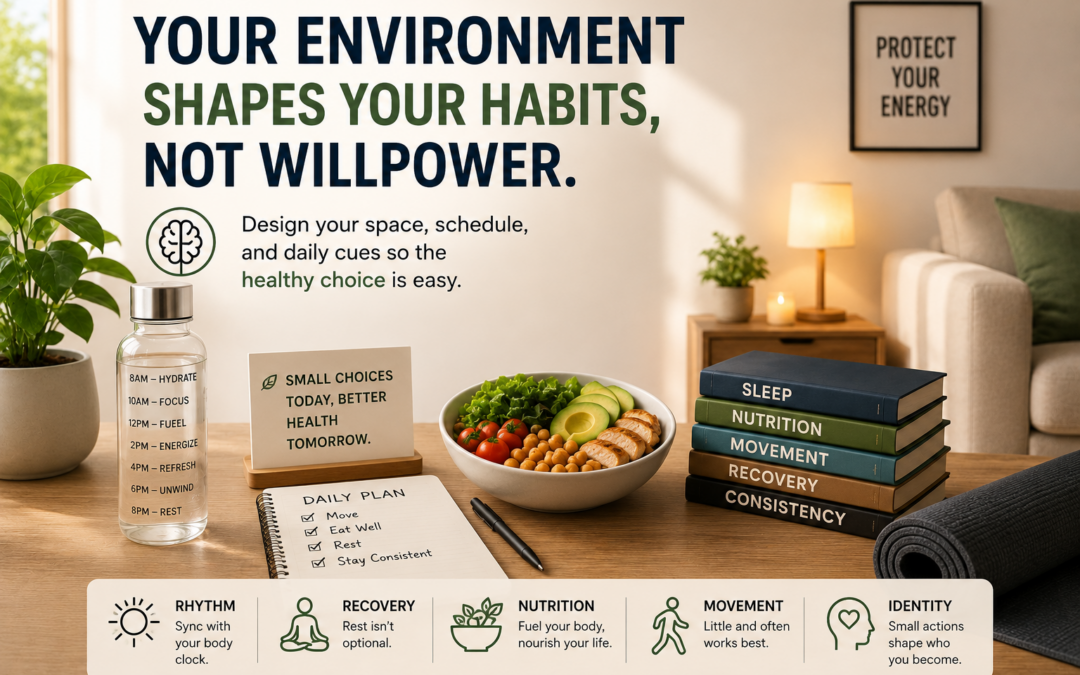
Here’s the part nobody tells you: that’s not a discipline problem. It’s an environment problem. If your surroundings are still built for convenience and speed, no amount of motivation is going to out-muscle that setup for long. This is where lifestyle architecture comes in designing your space, schedule, and daily cues so the healthy choice is simply the easy choice.
If you want to explore this idea in more detail, watch the full discussion on how your daily environment, habits, and energy systems influence your health. The video breaks down why lasting health changes are about more than willpower and how small, sustainable adjustments can support better results. Watch the full video here:
Willpower Runs Out. Here’s Why That Matters
Think of willpower like a phone battery. You wake up with a full charge, and every decision throughout the day drains it a little more – what to wear, what to say in that email, whether to take the call or let it go to voicemail. By 8 p.m., there’s not much left to fight off the couch, the extra snack, or the doomscroll.
That’s not weakness. That’s just how the brain works. So instead of trying to squeeze more willpower out of an already tired system, the smarter move is cutting down how much resistance your daily choices require in the first place.
The 4 Building Blocks of a Healthier Daily Life
-
Rhythm – Sync With Your Internal Clock
Your body runs on a 24-hour internal clock that quietly manages hormones, blood sugar, and mental sharpness in the background.
- Get natural light within the first 30 minutes of waking up
- Dim household lights after sunset to support melatonin
- Keep sleep and wake times consistent, even on weekends
- Avoid bright screens for at least 30–60 minutes before bed
When this clock is thrown off – late nights, inconsistent mornings, too much blue light — everything downstream suffers, from focus to appetite.
-
Recovery – Rest Isn’t Optional
Pushing through stress without ever downshifting is a fast track to burnout, even for people who are technically “doing everything right.”
- Take short breathing breaks between meetings or tasks
- Go for a 10-minute walk after a stressful call
- Try alternating warm and cool exposure (like a warm-to-cold shower)
- Build in a few minutes of true quiet, phone-free, each day
Real repair happens in these small pauses, not just during an 8-hour block of sleep.
-
Nutrition – It’s Not Just What’s on Your Plate
Nutrition goes beyond calories and macros. How, when, and with whom you eat all shape digestion and hormone balance.
- Front-load protein earlier in the day
- Sit down for meals instead of eating on the go
- Pair nutrients that work better together (like vitamin C with iron)
- Eat with people when you can – shared meals genuinely support long-term health
Some of the longest-living populations in the world share fewer dietary similarities than you’d expect, but they almost all share strong social connection around food.
-
Movement – Little and Often Beats All-or-Nothing
You don’t need a brutal workout every day to stay metabolically healthy.
- Walk after meals to help regulate blood sugar
- Stand or pace during phone calls
- Stretch between tasks instead of sitting for hours straight
- Save intense training for a few focused sessions a week
Consistency here matters more than intensity.
Small Cues, Big Impact
Your space is talking to your nervous system constantly, whether you’re paying attention or not. A few low-effort swaps that make a real difference:
- Warm, dim lighting in the evening instead of harsh overhead lights
- A cooler bedroom, roughly 65–68°F, for deeper sleep
- Supplements or water bottles placed somewhere you’ll actually see them
- Workout clothes set out the night before
- Phone charging outside the bedroom instead of on the nightstand
None of these require extra motivation once they’re set up. They just quietly do the work for you.
Identity Beats Repetition
There’s a real difference between “I should work out more” and “I’m someone who takes care of their body.” The second version sticks. Every small action – a short walk, a home-cooked dinner, an earlier bedtime – reinforces that identity. Enough small wins stacked together, and the behavior stops feeling like effort. It just becomes who you are.
What a Real Plan Looks Like
A solid health plan starts with actual data, not guesswork. That usually means checking things like hormone levels, inflammation markers, and sleep quality before building anything. This kind of approach is outlined in more detail on diagnostics and testing, and it’s a far better starting point than a generic 30-day challenge.
From there, a personalized plan might layer in:
- Targeted nutrient and hormone support
- Structured recovery practices built into the week
- Advanced options like peptide therapy
- Regenerative treatments through a stem cell clinic to support tissue repair
Programs like the GPF method combine this diagnostic-first thinking with a lifestyle plan that actually fits into someone’s real week, instead of demanding they overhaul everything overnight.
If you’re searching for a stem cell clinic Seattle locals trust for this kind of integrative, data-backed approach, look for a practice that treats regenerative medicine as one piece of a bigger strategy – not a standalone quick fix. The strongest stem cell specialists pair treatment with the lifestyle and recovery habits that help results actually hold. And when comparing stem cell clinics, it’s worth asking how well they connect diagnostics, coaching, and treatment into one plan.
Where to Start
You don’t need to overhaul everything at once. Pick one piece:
- Fix your sleep and wake times first
- Add a 10-minute walk after lunch
- Set out tomorrow’s clothes tonight
- Move your phone charger out of the bedroom
Small, steady changes to your environment beat big, short-lived bursts of willpower nearly every time. If you want a clear starting point, you can book a consultation to figure out which part of your routine needs attention first.
Frequently Asked Questions
- What is lifestyle architecture, in simple terms?
It’s designing your daily surroundings, schedule, and routines so healthy choices happen automatically, without needing constant willpower to make them happen. - Why do most health habits fall apart after a few weeks?
Usually it’s not a discipline issue — it’s that willpower runs out fast, and without supportive systems in place, it’s easy to slide back into old patterns during a busy or stressful stretch. - What are the four pillars mentioned here?
Rhythm, recovery, nutrition, and movement. Together they shape how your body handles energy, stress, and hormones throughout the day. - Does sleep timing matter more than total hours slept?
Both matter, but consistent sleep and wake times help regulate hormones and blood sugar in ways that just chasing “8 hours” often misses. - Do small environmental changes actually move the needle?
Yes , dimming lights at night, cooling your bedroom, or keeping healthy cues within reach all lower the mental effort needed to make good choices, which makes them easier to stick with. - How does regenerative medicine fit into a lifestyle-based plan?
Treatments from a stem cell clinic or peptide therapy can support recovery and tissue repair, but they tend to work best alongside the daily habits that keep those results going long-term. - How do I figure out which part of my routine needs the most work?
Start with diagnostic testing. Checking hormone levels, sleep quality, and stress markers usually shows exactly where your current routine is working against you, rather than leaving it to guesswork.