
You started a new protocol, and instead of feeling better, you feel worse. More fatigue, a new rash, foggy thinking. Many people call this a “healing crisis” and push through. Sometimes that label fits. More often, the body simply has no good way to move waste out.
Picture a kitchen sink with a clogged pipe. Pour in more water and it spills over the edge. Adding more supplements, peptides, or IVs to a backed-up system works the same way. The exits need to be open first.
Detox Vs. Drainage: What’s the Difference?
The two words get mixed up, but they do different jobs.
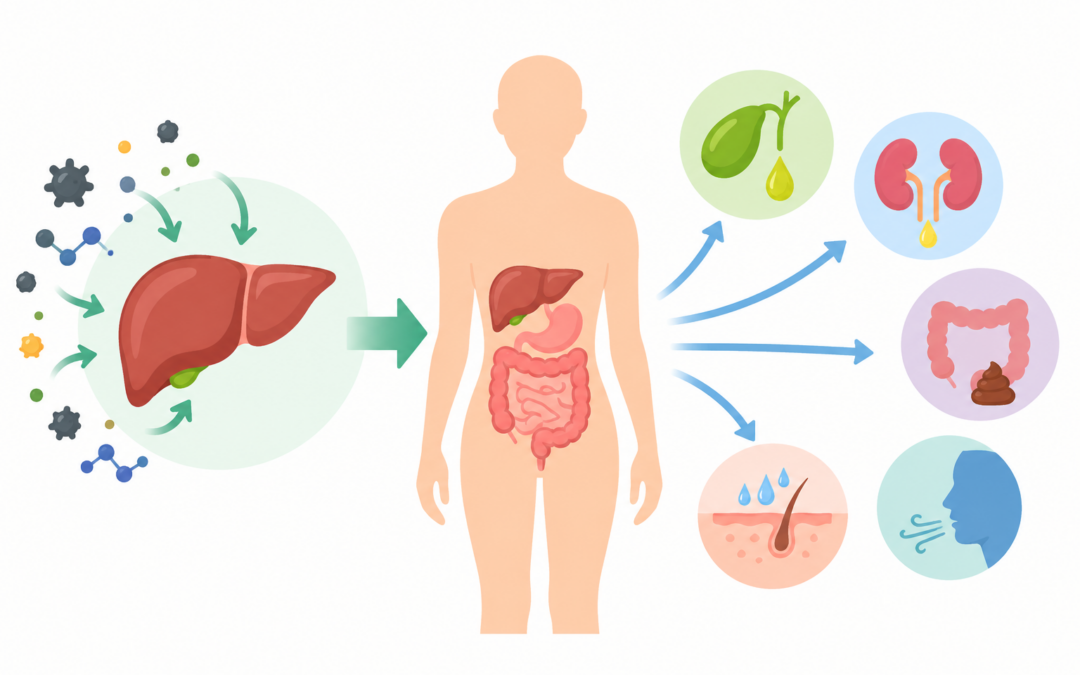
- Detox is how your body processes toxins, hormones, medications, and metabolic waste. Most of this happens in the liver.
- Drainage is how the processed material leaves: through bile, stool, urine, sweat, and breath.
Push the processing side without clearing the exits, and you stir up waste with nowhere to send it. That is why we start with drainage. The main players are the liver and bile ducts, the kidneys, the lymphatic system, the colon, and the skin.
How Your Body Clears Waste: Three Phases
Think of a small factory with three departments.
Phase 1: Breaking things down. Liver enzymes split toxins, hormones, and drugs into smaller pieces. Some of those pieces are more reactive than the originals, so they should not linger.
Phase 2: Tagging for removal. The liver attaches molecules to those pieces so they dissolve in water. This step, called conjugation, runs on B vitamins, folate, magnesium, sulfur-containing amino acids (found in eggs, garlic, and cruciferous vegetables), and glutathione precursors such as NAC. When these run low, the phase slows down.
Phase 3: Leaving the building. Tagged waste exits through bile, urine, stool, and sweat. People forget this phase, and it is the one that jams most often. If bile is sluggish, the kidneys are struggling, or you are constipated, waste can be reabsorbed into the blood and circulate again.
Imagine a bucket of muddy water. Stir it and everything swirls, but nothing leaves the bucket.
Signs Your Drainage May Be Backed Up
No single symptom proves it, and many have other causes worth ruling out. A cluster of them often points the same way:
- skin breakouts, rashes, or itching
- brain fog that sleep and caffeine don’t fix
- fatigue even when basic labs look fine
- odd reactions to supplements or past cleanses
- puffiness after travel or heavy meals
- stubborn weight and slow recovery after workouts
Lab markers add clues. Raised liver enzymes (ALT, AST, GGT), bilirubin, and homocysteine can suggest that the liver, bile flow, or methylation needs attention. That is why we pair this work with diagnostics and testing.
New: Headaches can show up in this cluster too. Many people want headache relief without medicine, and looking at hydration, sleep, and drainage habits is a reasonable first step. Sudden or severe headaches should always be checked by a doctor.
A Pattern We See Often
Here is a composite of a common story. A man in good shape, exercising daily and eating clean, used growth hormone peptides with little result. He had afternoon crashes, itchy red skin on his neck, and weight that would not move. His labs showed high liver enzymes, a bilirubin pattern that pointed to slow bile flow, and homocysteine near 20, well above the typical range and linked to higher cardiovascular risk.
We paused the add-ons and worked on drainage first: bile support, lymphatic movement, a binder rotation matched to his symptoms, and mineral support. About a month later his symptoms were roughly 70 percent better and his energy felt steady rather than stimulated. Results vary, but the lesson holds: order matters.
How to Reopen Your Drainage Pathways
Work from upstream to downstream, the way a plumber would. Skip a step and the rest gets harder.
1. Hydrate and replace minerals
Water carries waste out, and minerals help your body hold and use that water. Add electrolytes and a pinch of unrefined salt, unless a doctor has told you to limit sodium.
2. Get bile moving
Bile is one of the main roads out of the body. Common supports include bitter herbs (artichoke, dandelion root, gentian), bile salts such as TUDCA or ox bile, and phosphatidylcholine to help thin bile. Taking bitters before meals is an easy daily habit.
3. Move your lymph
Your lymphatic system has no pump of its own. It depends on movement, hydration, and temperature changes. Walking, rebounding on a mini trampoline, dry brushing, and sauna all help. New: Manual lymphatic drainage is a gentle massage that encourages lymph flow, and many people try lymphatic drainage therapy when they feel puffy or sluggish.
4. Keep the bowels and kidneys moving
If you are not having a bowel movement every day, everything upstream hits a wall. Fiber, prebiotics, and magnesium can help. Binders such as humic and fulvic acids, activated charcoal, and silica-based products hold onto waste in the gut so it leaves in stool. They can also bind medications and nutrients, so space them away from both and ask a clinician before starting a rotation.
5. Stack carefully, then test
More is not better. We adjust each layer using lab results, symptoms, and exposure history, such as mold, heavy metals, or past infections. A plan built for one person rarely fits the next. You can explore our services or schedule a visit to build yours.
Build a Rhythm, Not a One-Week Cleanse
The word “detox” has been hijacked by juice cleanses and colon kits. Real support for your body’s clearing systems is a daily rhythm:
- Bitters before meals and electrolytes through the day.
- Regular sauna, rebounding, or lymphatic sessions.
- Filtered drinking water and a HEPA filter for indoor air.
- Glass or stainless steel in place of plastic food storage.
- Screen-free wind-down time, breath work, and steady sleep.
- Mitochondrial support through movement and, where appropriate, nutrients like CoQ10 and PQQ.
Fasting can also support the body’s natural cell cleanup, known as autophagy. But more is not better. Long water-only fasts carry real risks, so talk with a clinician before fasting past a day, and avoid going beyond about three days without medical supervision.
Where Drainage Fits with Everything Else
If you already invest in peptides, IV therapy, or medical weight loss and still feel stuck, your clearing systems deserve a closer look. These therapies tend to work better when the basics are in place. Regeneration does not start with what you add. It starts with what you release first.
Frequently Asked Questions
What is the difference between detox and drainage?
Detox is the processing of waste inside the body, mostly in the liver. Drainage is the removal of that processed waste through bile, stool, urine, sweat, and breath. Both need to work, and drainage should be open first.
Is a healing crisis real?
Temporary changes can happen when you start a new protocol, but worsening symptoms are not a badge of honor. Often they point to slow drainage, a dose that is too high, or a poor fit. Tell your provider rather than pushing through.
How long does it take to reopen drainage?
It varies. Some people notice better energy and skin within a few weeks, while others need longer. Your labs, symptoms, and starting point set the pace.
Does everyone need binders?
No. Binders suit some people and not others, and the timing matters because they can bind medications and nutrients. A clinician can tell you if they make sense for you.
Can I keep taking peptides or IVs while working on drainage?
Often yes, but the order and timing should be planned with your provider. Some people do better pausing add-ons while drainage is rebuilt.
Is extended water fasting safe?
Not for everyone. Fasts beyond a day or two can cause muscle loss, electrolyte problems, and issues for people who take medication. Get medical guidance first.
Which tests help show how my drainage is working?
Common starting points include liver enzymes, bilirubin, homocysteine, and gut and kidney markers, along with your symptoms and exposure history.
Want a plan based on your own labs and symptoms?
Contact our team or book an appointment. You can also listen to more episodes on our podcast page, read other articles on the blog, or learn who we are on the About Us page.