
Scroll through social media and you will find a skin expert on every feed. A new serum here, a new acid there, a twelve-step routine for good measure. Yet plenty of people who follow that advice end up with skin that is redder, drier, and more breakout-prone than when they started.
On a recent episode of the Unbreakable Vitality podcast, host Daniel Rasmussen sat down with licensed esthetician Samantha Dench to talk about why. Her view is simple: skin often reflects what is happening inside the body, and it usually needs less, not more.
How Samantha Went from Facials to Functional Medicine
Samantha’s interest began with her own skin. In 2006 she came off birth control to start a family and got acne for the first time in her life, even though she worked in a spa doing facials every day. Her skin stayed clear through her pregnancies. After two pregnancies only 14 months apart, it broke out again.
A friend suggested a 14-day gut cleanse that removed common inflammatory foods. Within a week, her skin cleared. When her old eating habits returned, so did the breakouts. That pattern sent her down a long road of learning about the gut and the skin. She used those ideas in her facials for years, and more recently she added a functional medicine program so she can order testing and look for root causes.
Why Skin Often Shows Trouble First
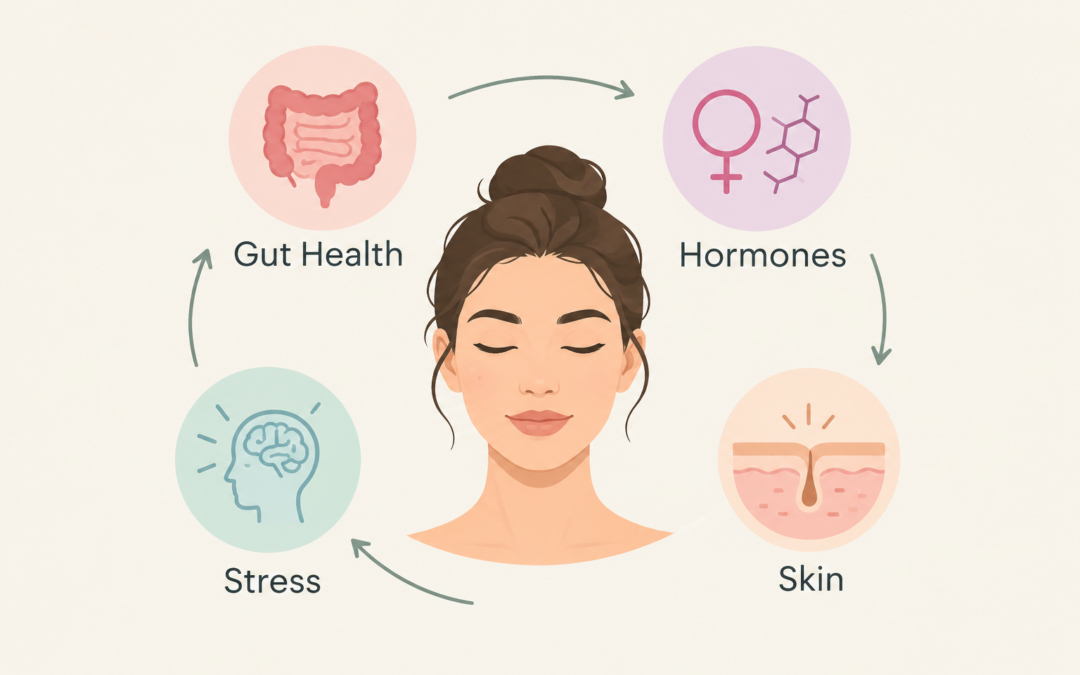
Samantha calls skin the body’s first line of defense. In her experience, acne, rosacea, and even early wrinkles tend to trace back to the gut, hormones, or stress. Skin also takes part in clearing waste through sweat and oil, so ongoing inflammation inside the body can show up on the surface.
Daniel shared his own story. He dealt with rosacea and cystic acne for a stretch, and he noticed that a stressful morning at work could mean two or three new breakouts by evening. Stress hormones act fast, and skin is one of the first places people see it.
The Common Culprits
Three themes came up again and again in the conversation:
- Gut health. Bloating, headaches, and changes in digestion often show up alongside skin problems.
- Hormones. Pregnancy, stopping birth control, perimenopause, and menopause can all change how skin behaves.
- Stress. Samantha now thinks of stress as the root of much of what she sees, and cortisol can drive inflammation and breakouts.
Headaches deserve a mention here. When they show up alongside skin flare-ups, tracking food, sleep, and stress can reveal a pattern. Many people want to relieve a headache without medication, and working on those triggers is a good first step. Learn more about headache relief without medicine on our headaches page. Sudden or severe headaches should always be checked by a doctor.
Start with a Food Journal
Under her esthetics license, Samantha cannot tell clients what to eat. So she asks questions about digestion, bloating, and headaches, then suggests a simple tool: a food journal. Write down everything you eat each day, and at the end of the page note how your skin looks. Did it flare, stay calm, or change?
Some reactions show up within an hour, while others take longer. Over a few weeks the pattern can become clear. For Samantha, dairy was a long-time trigger. Her advice if you try an elimination: remove one food at a time. Pull everything at once and you will not know what made the difference, and most people will quit.
Why Store-Bought Acne Products Often Backfire
Most over-the-counter acne products are made for a teenager with very oily skin. Adults with hormonal, cystic, or inflammatory acne are a different case. Harsh cleansers and scrubs can lower the skin’s pH and wear down its protective barrier.
Samantha uses a brick wall as the picture. Over-scrubbing and heavy treatments chip away at the bricks and leave small holes. A damaged barrier tends to feel dry, reactive, and irritated, and that makes breakouts harder to settle.
The Strip-It-Down Reset
When a new client arrives with irritated skin, Samantha sends them home with two products: a cleanser and a moisturizer. They use both twice a day for 30 days, and nothing else.
Her basic rules for dry or reactive skin:
- Choose a cream or oil cleanser, not a gel cleanser.
- Use a thick moisturizer.
- Exfoliate gently with an enzyme product, not acids or scrubs.
Recovery takes patience. The barrier usually needs at least four weeks, and sometimes eight or more, depending on the damage. She described one client with dehydrated, reactive skin who followed this plan and returned glowing. Her reaction was that she could not believe it was that easy. Skincare, Samantha says, does not have to be complicated.
When It Is Time to Test
Samantha gives barrier repair and diet changes about two to three months. If the skin is still not clearing, she moves to testing. Options include:
- gut bacteria and parasite testing
- inflammatory markers
- food sensitivity testing
- a hormone panel that also looks at cortisol, organic acids, vitamin levels, and how the body processes hormones (results take about four to six weeks)
Tests are a guide, not the final word. Daniel described a stool test for parasites that came back negative, yet he chose a long gut protocol and saw his rosacea improve over about six months. That is one person’s experience, not proof for everyone, and testing can miss things. A qualified clinician can help you decide what makes sense. If you want to learn more about this side of care, see our diagnostics and testing page.
Skin Changes in Midlife
For women between 40 and 60, skin can turn reactive during perimenopause and menopause. Samantha hears a familiar story: the skin is breaking out, a doctor says hormones look fine, and the woman still does not feel fine.
Two points stood out. First, stress and adrenal function can mimic perimenopause, so a woman may think her hormones are shifting when cortisol is the bigger piece. Second, timelines vary a lot from one person to the next. Daniel added that lifestyle matters here too: sleep, the time of day you exercise, and your cortisol rhythm can all move the needle. Samantha starts these clients slowly and builds their routine step by step. If you are exploring longevity care more broadly, our services page is a good place to begin.
Treatments That Support Aging Skin
Once the barrier is healthy, some in-clinic options can help. Samantha offers:
- Microchanneling, a gentler cousin of microneedling that stimulates collagen and supports healing. She uses it for aging and acne scars, but not on skin that is actively breaking out or compromised.
- Mild chemical peels and dermaplaning.
- Microcurrent, her favorite. It uses a low electrical current to stimulate facial muscles, like a workout for the face, and offers a way to slow visible aging without injections or lasers.
Beyond the skin itself, some people also look at how fluid moves through the body. Manual lymphatic drainage is a gentle massage technique that encourages lymph flow, and many people try lymphatic drainage therapy when they feel puffy or sluggish. You can read more about it at Pinnacle Integrative.
A Simple Daily Routine
Samantha switches clients’ products with the seasons. She lives in Chicago, where summers are humid and winters are dry, so one routine will not fit all year.
Morning: cleanser, a serum (hyaluronic acid or vitamin C, depending on your skin), then moisturizer.
Evening: cleanser, an anti-aging serum, extra hyaluronic acid if you are dry, then moisturizer. She likes bakuchiol, a plant-based ingredient, as a gentler option than retinol.
Add one gentle exfoliation a week and a monthly facial to maintain results.
Key Takeaways
- Skin often reflects gut health, hormones, and stress.
- Less is often better: a cleanser and moisturizer can reset a damaged barrier.
- Change one food at a time and keep a journal.
- If skin does not improve in two to three months, look deeper with testing.
- Midlife skin needs a personal plan, not a one-size routine.
Frequently Asked Questions
Can what I eat really affect my skin?
For some people, yes. Foods like dairy or gluten can trigger flares in certain individuals, though triggers differ from person to person. A food journal and one-at-a-time changes help you spot your own pattern.
How long does it take to repair a damaged skin barrier?
Usually about four to eight weeks, depending on how irritated the skin is. Simple products and fewer actives give it room to recover.
Why are acne products from the store not working for me?
They are often built for teenage oily skin. Hormonal, cystic, or inflammatory acne in adults tends to need a different approach, and harsh products can make it worse.
When should I get hormone or gut testing?
If diet changes and barrier repair have not helped after about two to three months, testing is a reasonable next step. Talk with a qualified provider about what fits your situation.
Is microchanneling safe for acne-prone skin?
Not while skin is actively breaking out or the barrier is compromised. It is better suited to acne scarring once the skin has calmed down.
Can stress alone cause breakouts?
It can contribute. Stress hormones such as cortisol can increase inflammation, and many people notice flares during stressful periods.
Can I work with Samantha online?
Yes. She works with clients virtually. You can visit her website at skindeepil.com or find her on Instagram at @skindeepil, or connect on LinkedIn.
Ready to look at your health from the inside out? Contact our team or schedule a visit. You can find more episodes on our podcast page, read more articles on the blog, or learn about us on the About Us page.